
The Best Lenses for Travel Photography: What I Pack After 52 Countries
The type of photography you do decides which lenses will serve you best. So let's start with the big one: prime versus zoom.
Prime versus zoom
A prime lens has a fixed focal length. In terms of sharpness for the money, a prime will almost always be the better bang for your buck. Canon's mighty 50mm f/1.8 cost less than $150 and was sharper than plenty of Canon lenses selling for $600 to $700. With no zoom mechanism, the designers can focus on nailing exactly that one focal length.
A zoom lets you zoom in and out. With a prime, you have to use your feet.
What changes when you travel
When you are boarding planes and moving from country to country, a few things matter more than they do at home.
The larger the lens, the more the camera sticks out, and the more likely you are to run into trouble with someone trying to take it off you. That happened to me once or twice before I worked out exactly what my travel setup should be.
Then there is the do-it-all lens: one of the all-in-one superzooms Sigma and others make, designed to cover every base. What you gain in convenience, you lose in sharpness, in how much light the lens can bring in (the aperture, which I explain in what is aperture), and in size.
The two lenses I bring overseas
1. A fixed ultra-wide. Cityscapes and landscapes are so much fun with a lens that really distorts reality. A 50mm on a full frame sensor roughly matches what your eye sees, without the peripheral vision. Stretch that field of view much wider and you get a very dramatic scene.
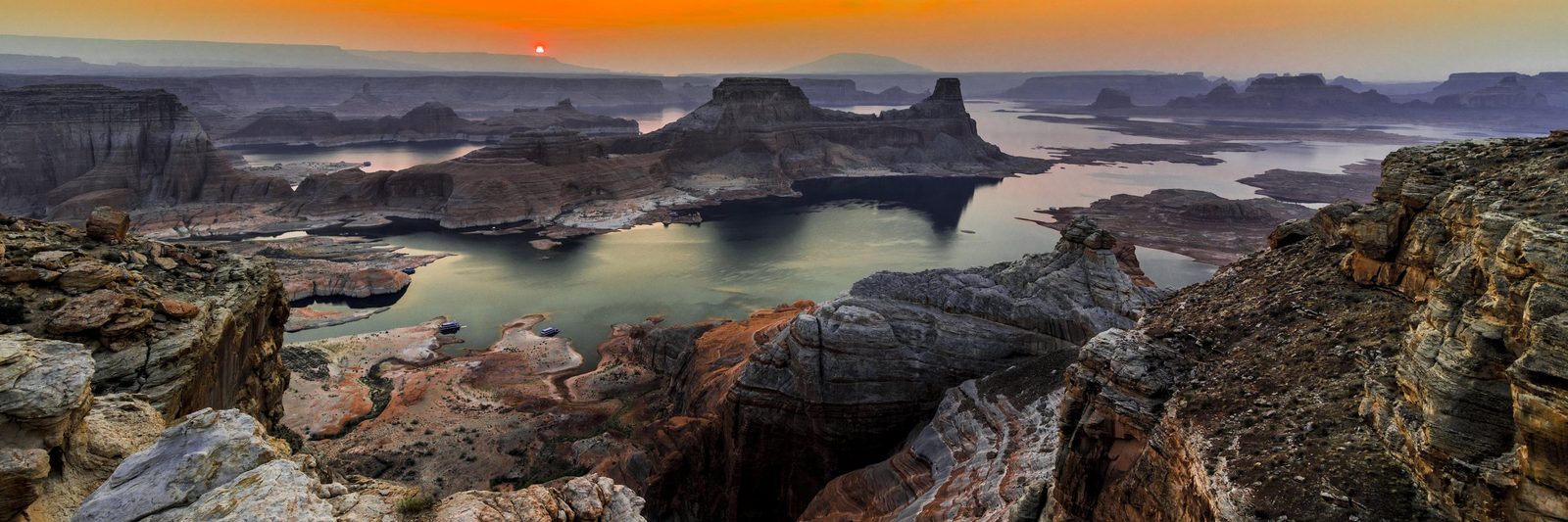
I also shoot medium format, and my GFX 100S has a 65:24 panoramic format, the XPan look, which gives me a wide, dramatic panorama I absolutely adore. I prefer the ultra-wide as a prime because of its size, so it can always live in my bag. Anywhere from 14mm or 16mm up to 24mm is really nice.
2. A small zoom that covers 35mm and 50mm. Modern sensors let you crop in quite a bit. If you want to shoot portraits on the street, an 85, a 105 or even a 150 is amazing, because you do not have to be right in someone's face to get the photo. But for your average city scene and day of travel, most of the time you are going to be under 50mm.
I have traveled to 52 countries with a camera and shot over 17 TB of RAW files. Across all of that, those are the focal lengths I use 85% of the time.
The lenses I stopped carrying
For a large part of my travels, I carried a Sigma 50-500. What if I go shoot wildlife? What if I see something I need from far away? What if I end up at a sporting event? I rarely used it, and it took up so much room in the bag. Same with my 70-200 f/2.8.
There is always a fine line between how much weight you want to carry and how much gear you can bring. A small setup is easier on your back, less likely to draw attention, and it will actually get used.
One tip: black out the logos
Take a little black electrical tape and cover both the brand and the model name on your camera. Black everything out. The moment I started doing this, back in 2014, everything shifted. My D610, and later my D850, drew about a third as many glances taped up as they did without it.
Happy hunting
Remember, the best camera is the one you have. All the glitz and glamour of the newest, most expensive flagship will not get you a better photo than a camera made ten years ago (more on that in what camera should I use). The only thing that matters is that you press the shutter button and enjoy it.
 Read nextWhy I Chose Fujifilm: From Nikon to Medium Format3 min read
The collection
Every photograph is a signed limited edition, printed to order in acrylic, metal or canvas.
See the collection →Try one on your wall