
What Camera and Lens Should I Use for Wildlife Photography?
This is where it gets a little more complicated, and a lot more expensive. With wildlife, four things make the biggest difference to how many of your images succeed:
- Your lens
- Your autofocus
- Your frame rate
- Your focal length
The lens
This is where serious money gets spent. My go-to has always been a 500mm f/4 prime. Once you move to zooms, there is a big drop in sharpness, and with wildlife a tack-sharp eye and a realistic rendering are critically important for any professional work.
Zooms like the 150-500 and the 200-600 are capable lenses, but they really show their limits on proper, in-the-moment shots that will never happen again. That does not mean you will never get a good image with one. I used to shoot a Sigma 50-500, and I have so many incredible images from it. But the miss rate on that lens, and on many of these big zooms, is significantly worse than the hit rate on an excellent prime.
That quality comes at a cost. You can easily spend $9,000 on a great wildlife lens, so budget matters:
- Under $1,500 to $2,000: a zoom is realistically what you can get.
- A bit more: look at a used, older 400mm f/2.8, 500mm f/4, 600mm f/4 or 800mm f/5.6. You are going to be thrilled. They are built like absolute tanks and will last you forever.
Those long primes also answer the focal length question. Wildlife rarely lets you get close, so reach matters, and a 400mm to 800mm prime gives you reach and sharpness together.
Autofocus
This is where mirrorless took a huge lead over DSLRs. Autofocus and tracking are crucial for getting tack-sharp images over and over again, because wildlife moves fast and it is very taxing on any camera's autofocus. Look for 3D tracking, eye tracking, and anything else that helps you get more frames sharp.
It is a bit like the safety features in a car. If you are an experienced driver, all you need is a gas pedal, a clutch and a stick shift. Photography is the same: if you practice over and over, you can absolutely get tack-sharp images consistently with an older camera and an older lens. For someone just getting into it, that is much harder, and you really need to understand your system. Newer cameras have autofocus designed to be set and forgotten. Even for professionals, that means more sharp frames out of every ten, which is awesome.
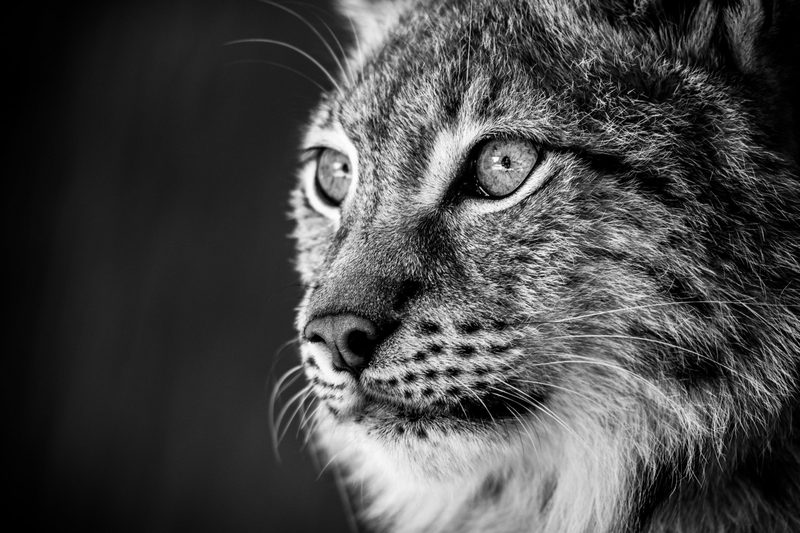 Killer EyesLimited Edition
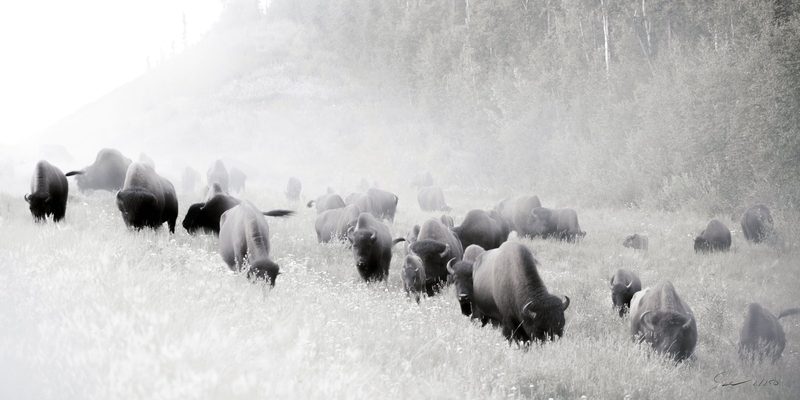 Misting HerdLimited Edition
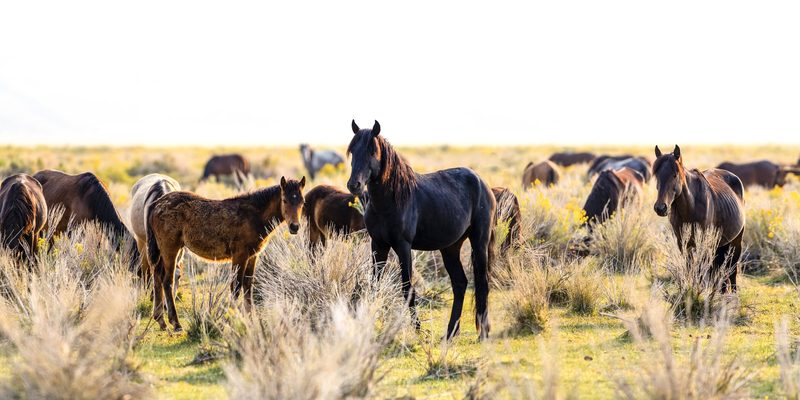 Stand OffLimited Edition
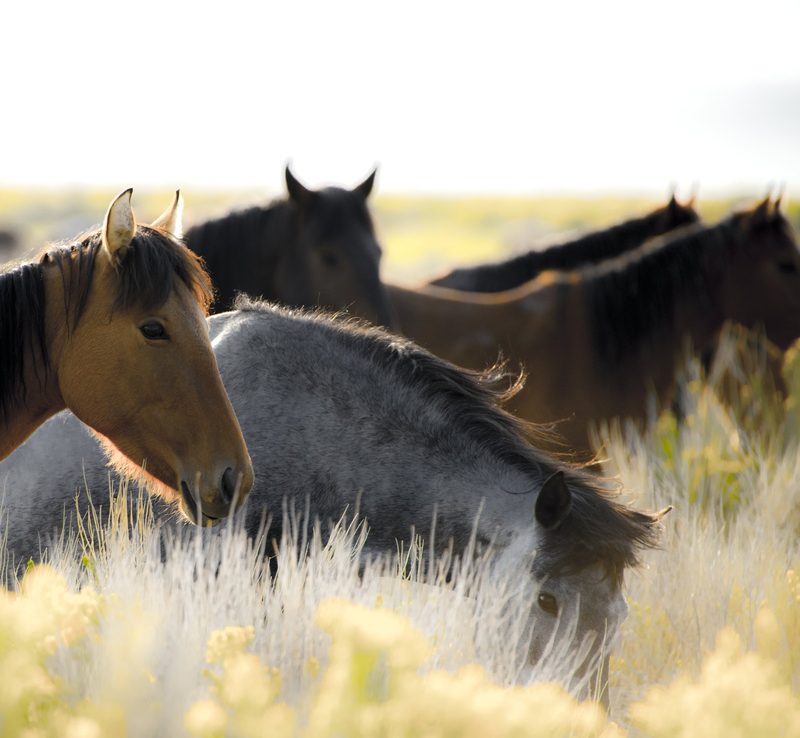 Graceful GazeLimited Edition
Frame rate
Frame rate is how many images your camera can take in one second. My Nikon D850 shoots 7 frames a second, and so many times I have missed a moment that happened right between two frames. It always bugged me.
- Nikon D8507 fps
- Top mirrorlessup to 30 fps
Top-of-the-line mirrorless cameras can shoot 15, 20, even 30 frames a second. There is no mirror flipping up and down for every shot, which removes much of what used to limit the frame rate.
Do I always say shoot at the fastest frame rate? No. You will quickly fill your camera's buffer and your memory card. And somehow, the way the world works, the perfect moment always happens right when your camera starts to buffer.
Where to spend your money
Those four things are what I think about whenever I shoot wildlife or recommend gear to someone. Put more money into your lens than your camera body. A good lens can last you twenty years. You can go through six camera bodies and that lens will still be great.
I typically buy lenses new, and I buy a very good version. Camera bodies I will often buy used and save a little there, because the glass is what I keep as I stay in each system. (I covered what I pack when I travel light in the best lenses for travel photography.)
As always: get out and shoot. It is the only way to get better.
 Read nextCanon vs Nikon vs Sony vs Fujifilm: Camera Brands Compared3 min read
The collection
Every photograph is a signed limited edition, printed to order in acrylic, metal or canvas.
See the collection →Try one on your wall